In an era where customer data is referred to as the "new oil," many businesses are still trying to carry this valuable resource in rusty buckets. The classic answer of "customer relationship management software" to the question of what CRM systems are now represents only the tip of the iceberg. A real CRM is not just a database; it is the digital heart of your sales, marketing, and operational processes.
However, the giant, cumbersome software packages on the market that approach businesses with a "one-size-fits-all" mentality usually force companies to fit into their own molds. Yet, every brand has processes as unique as a fingerprint. In this guide, we will examine in depth how to go beyond the limits of generic software and how to build a system tailored to your business's DNA.
What Are CRM Systems? More Than Just Software
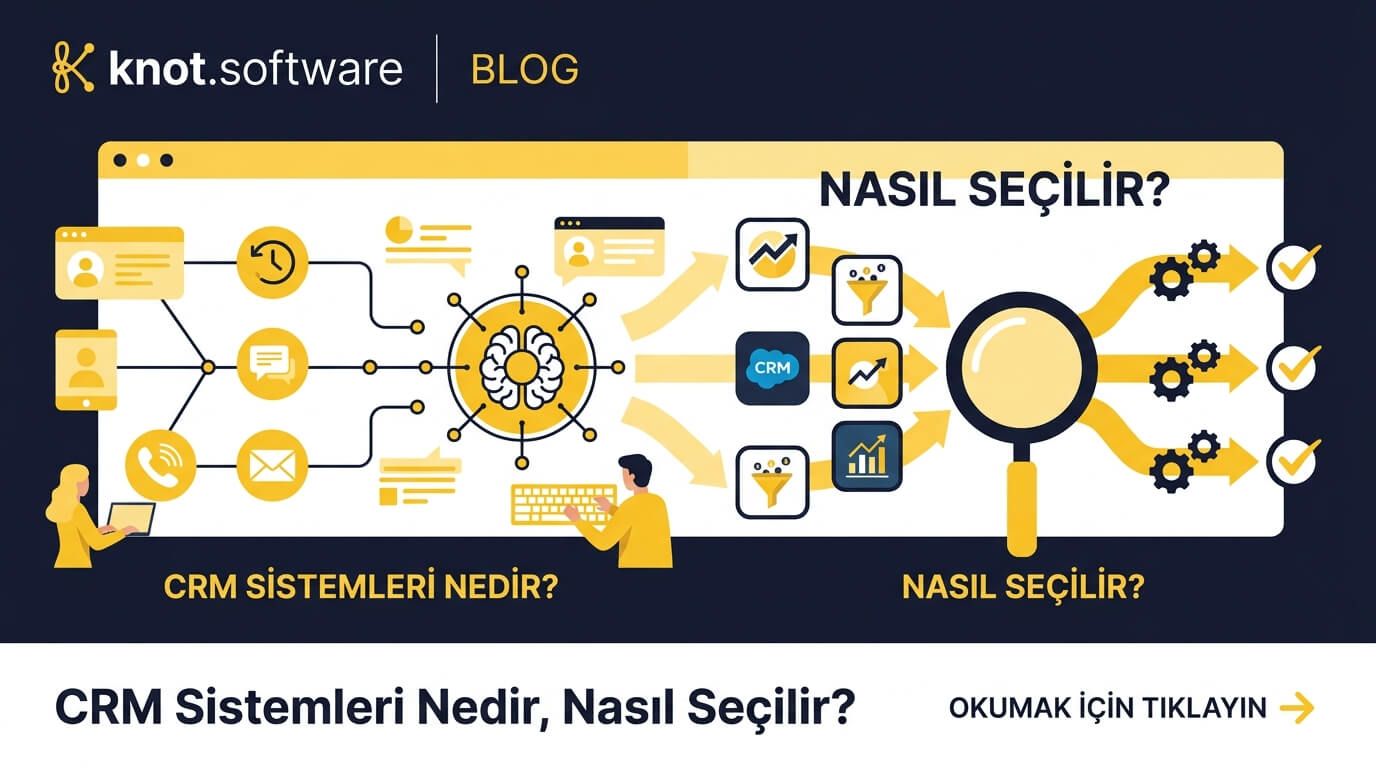
In its simplest definition, CRM (Customer Relationship Management) is a whole set of strategies and technologies that allow you to manage your interactions with current and potential customers through a centralized system. However, in the modern world, what is expected from a CRM is not just saving phone numbers.
As a true digital transformation tool, a CRM must be equipped with automation capabilities, artificial intelligence integration, and data analytics. The entire data flow—from a sales representative's last meeting with a customer to which blog post that customer read on your website—should merge on a single screen. At this point, the importance of web design and user experience (UX) comes into play; a simple and functional interface is essential for managing complex data.
The "One-Type" Trap of Industrial Giants: Why a Different Path?
The giant software companies whose names you frequently hear on the market today usually offer massive, clunky templates that appeal to thousands of different industries. Although these structures look like a "safe harbor," they actually trap your business within the limits of that software.
- Loss of Flexibility: You cannot implement a workflow that the software does not allow.
- Unnecessary Complexity: You pay for hundreds of modules you will never use, confusing your employees.
- Integration Problems: Connecting your own custom automation systems or niche tools to these closed boxes is often a nightmare.
With a boutique approach, an architecture built from scratch and customized for corporate needs ensures that the software adapts to your business, not your business to the software. This is just like the difference between an off-the-rack suit and a bespoke outfit that fits you perfectly.
How to Choose a CRM? A Strategic Roadmap
When choosing a CRM system, you should put not only your goals for today but also your goals for 5 years from now on the table. Here are the critical questions you should ask during the selection process:
1. How Well Does It Adapt to Your Processes?
It is not enough for the software to digitize your current workflow; it must optimize it. If a software forces you to say, "This is how things work in our system, so get used to it," walk away from that software.
2. Does It Have SEO and Data Analytics Integration?
Your CRM should not only understand internal data but also signals from the outside world. A system integrated with SEO data can tell you which keywords bring in customers with higher conversion rates. This is your biggest trump card when managing your marketing budget.
The Standard of the Future: AI and Automation Integration
A CRM system can no longer be just a passive record keeper. In the 2026 vision, a system must offer proactive recommendations thanks to artificial intelligence integration. For example:
"This customer has not made a purchase for the last 3 months, you might want to send this offer."
"The sales cycle is moving 20% slower than usual, the bottleneck is at this stage."
At this point, automation is the unsung hero that minimizes human error. Having repetitive tasks (email sending, invoicing, reporting) taken over by the software allows your team to focus on creative work. Today, competent individuals who can use software like N8N and Flowise well and integrate them successfully into company flows are laying the foundations of the automation industry of the future.
The Power of Boutique Software: Break Free from Templates
Large software houses mass-produce; we take a craft-oriented approach. As Knot Software, instead of offering our clients a ready-made box, we analyze their business processes with the precision of a tailor.
When we start a CRM project, we don't just write code. We build a unique ecosystem that connects every point, from your business's web design dynamics to your digital marketing strategies. This is a structure that contains no "dead space," where each module directly serves profitability.
Frequently Asked Questions (FAQ)
Is a CRM necessary for a small business?
Yes. A regular system established while the number of customers is small prevents the chaos that will be experienced during the growth phase. A scalable automation infrastructure allows small teams to manage giant operations.
Is custom software development too expensive?
At first, packaged software may seem cheap. However, when annual licensing fees, additional module costs, and productivity losses due to the inflexibility of the software are calculated, corporate custom software offers a much higher return on investment (ROI).
Can our CRM system talk to our other tools?
Absolutely. A modern CRM architecture must be able to integrate at the API level with all kinds of external sources, from the accounting programs you use to your SEO tools and social media platforms.
Do Not Entrust Your Digital Future to Templates
The answer to the question of what CRM systems are is limited only by your vision. If your goal is just to use a more advanced version of an Excel spreadsheet, you can choose one of the thousands of generic solutions on the market. However, if your goal is a flawless operational power that turns data into profit, is supported by artificial intelligence, and permeates every cell of your business, then it is time to step outside the standards.
Are you ready to meet a system built from scratch, tailored specifically for you, and woven with the technologies of the future? As Knot Software, we are here to transform your complex needs into unique software solutions.